

- A new unique identifier (UUID)
- For invoices: the code removed and the issue date set to the current date
- All other data from the source document preserved
When to replicate documents
Replication saves time when creating documents that share most of their content with existing documents. Here are common scenarios where replication is helpful:- Recurring services with variable quantities. For example, a maintenance contract where the base fee is identical each month, but hours or consumables change slightly.
- Seasonal or cyclical orders. Clients who reorder the same products periodically (quarterly restocking, annual service packages). The base invoice mirrors prior cycles; only dates or quantities shift.
- Template for similar customers. If several clients receive a comparable service package with minor price or detail differences, starting from a proven invoice avoids rebuilding the structure from scratch.
How to replicate a document
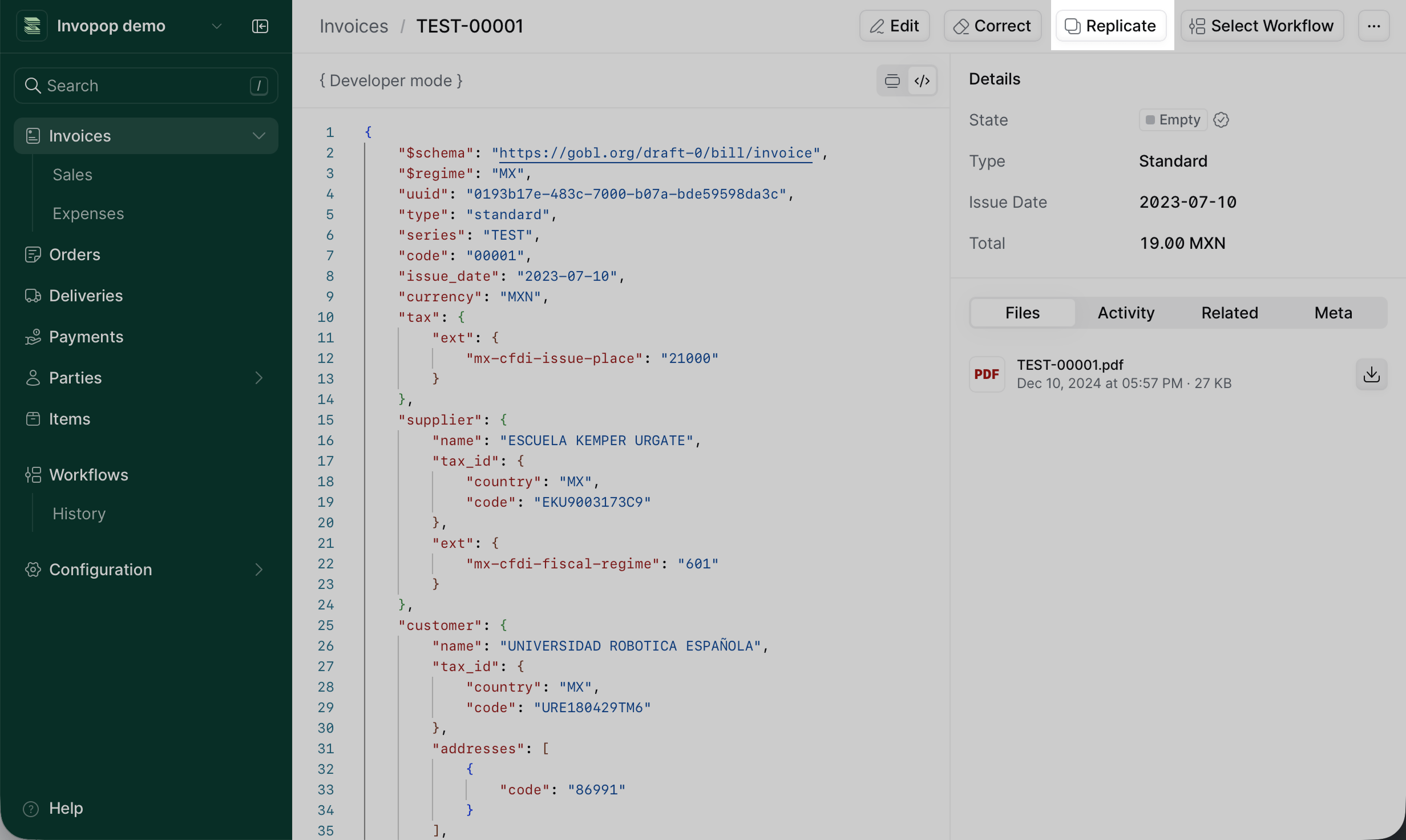
- Open the document you want to replicate
- Click the Replicate button in the document actions menu
- The system creates a new document with the same content
- Edit the replicated document as needed
- Save the new document
The replicated document is independent from the source document. Changes you make to one do not affect the other.
After replication
Once you’ve replicated a document:- Review the content to make sure all relevant information from the source document is present.
- Update variable fields such as quantities, dates, amounts, or other fields that need to change.
- Verify customer details to make sure addresses, names, and tax IDs are correct.
- Build the document to validate and enrich the document with calculated data.
- Save the document or send it through your workflow.